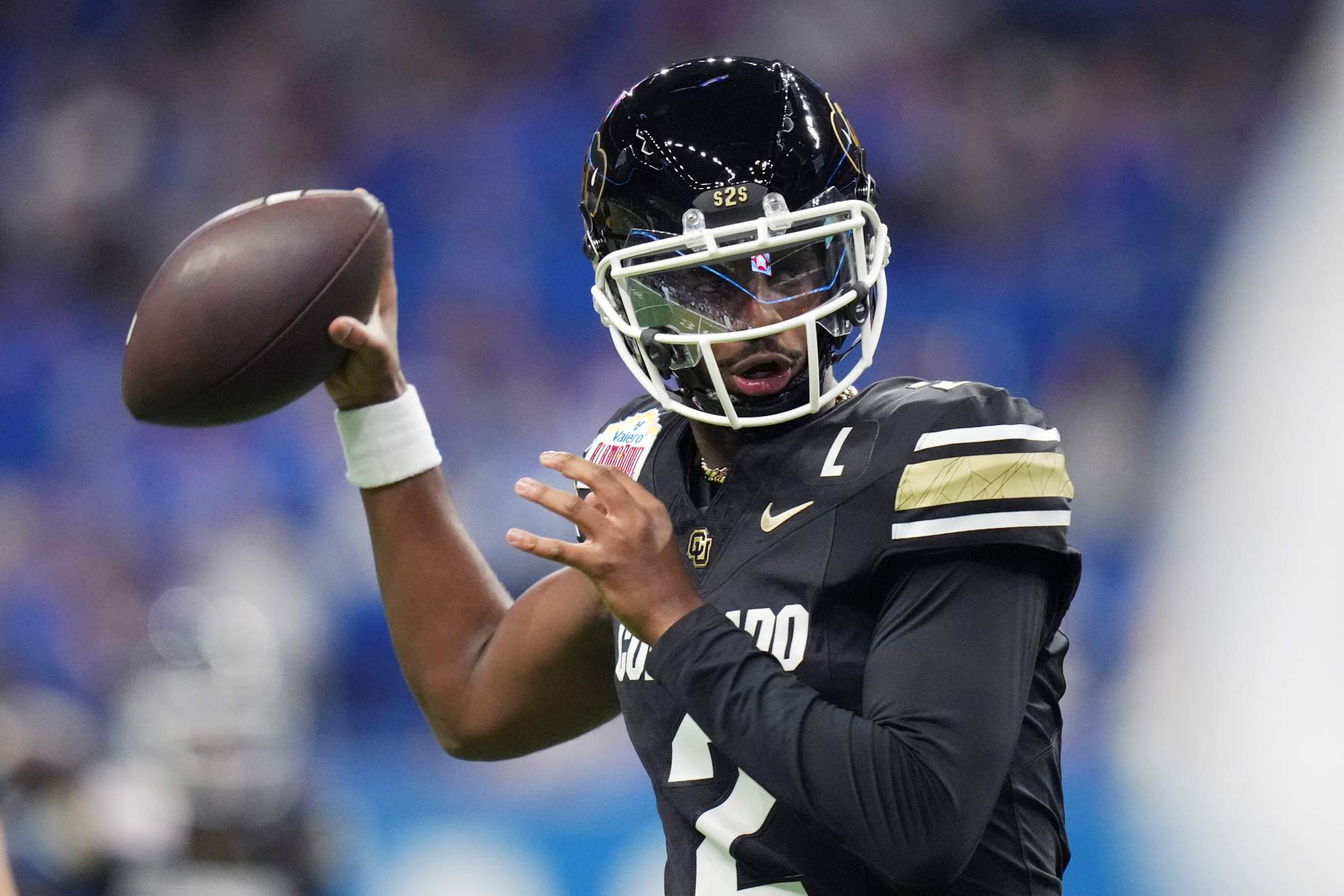
Shedeur Sanders took his first real NFL snaps on Sunday, stepping in after Dillon Gabriel suffered a concussion. His performance was difficult and triggered immediate reactions. Former quarterback Luke McCown offered a different perspective because he knew that situation well.
McCown explained how tough it is to be a mid-round backup. “The only time rookies and backups… get meaningful reps is in camp,” he wrote on X. He pointed out that starters take almost all the snaps during the regular season. Backups work with limited plays and often in unfavorable situations.
A rough beginning
According to Essentiallysports, Sanders entered the game with his team leading 16–10 against the Ravens. He played the entire second half and completed four of 16 passes for 47 yards. He didn’t throw a touchdown, suffered an interception, and was sacked twice. Three of his completions were very short. He attempted only one deep pass, which ended in an interception.
The offense stalled under his command. He led six drives, and the team gained just 44 total yards. Four drives ended in punts, one in a turnover on downs, and another in an interception. The contrast with the first half was clear. Gabriel had produced almost 150 yards and 16 points before leaving the game.
Former 4th round pick here..
Former Journeyman backup here..
I think there is a massive misunderstanding about how an NFL practice is structured.The only time mid round pick rookies and backups get meaningful reps is in training camp, and they are never with the ones unless… https://t.co/sO3EgqoiRl
— Luke McCown (@luke_mccown) November 17, 2025
McCown blamed the league’s structure. He explained that backups practice against full defenses but don’t run their own plays. They must translate scout-team schemes, which creates even more difficulties. To him, Sanders was already at a disadvantage before he stepped on the field.
He also addressed the unfair expectations. People expect the backup to perform at the starter’s level. The evaluation happens immediately, and a bad outing weighs more than the context. “You play, you learn, you grow and you get better, or you don’t,” McCown summarized.
The situation highlights a broader issue. Backups receive very few real development opportunities. Their practice reps are minimal, and their margin for error is almost nonexistent. Sanders’ case reflects that reality. He wasn’t ready because the system doesn’t allow him to be. His debut doesn’t define his future, but it does spark a debate about the current preparation model.