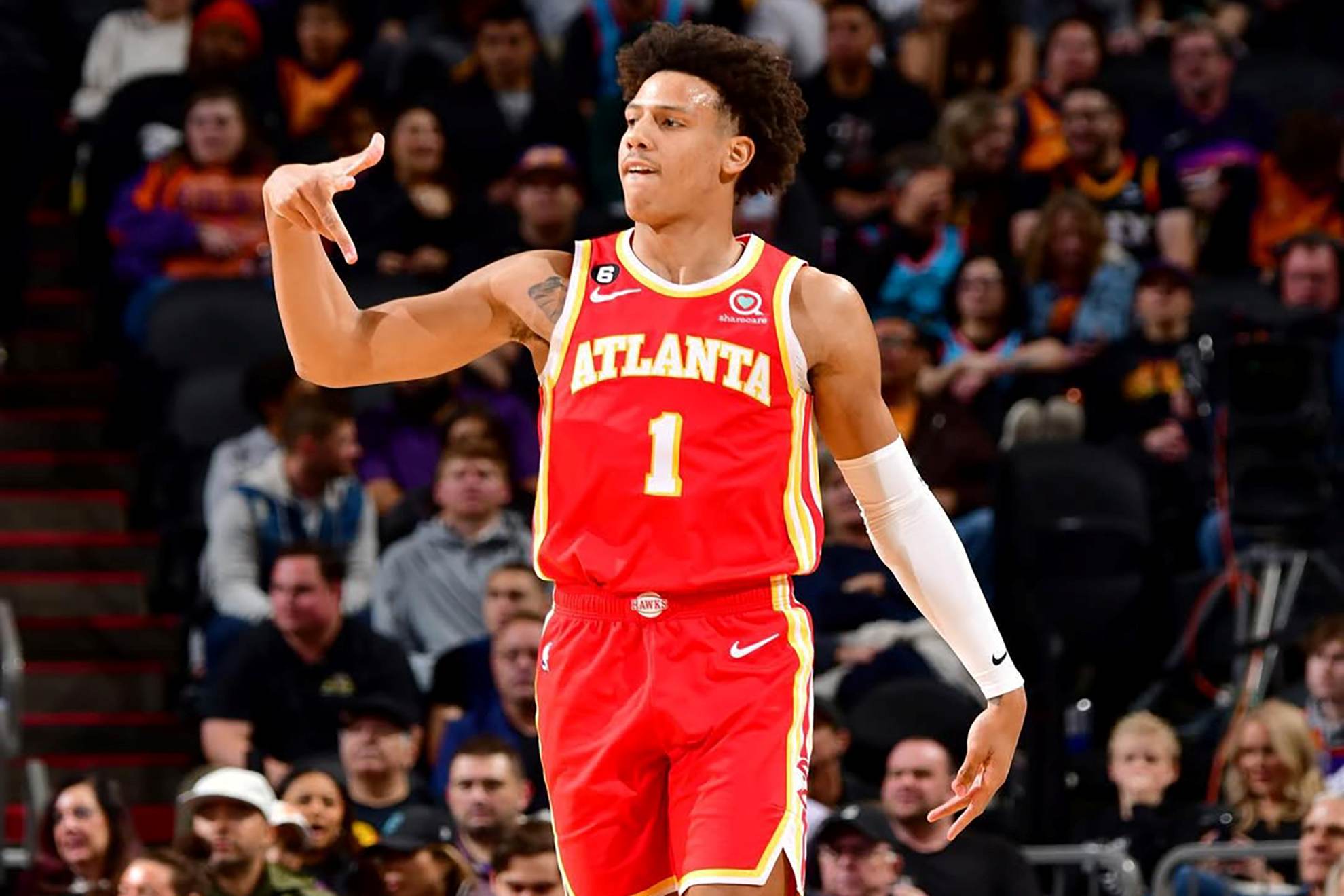
Atlanta found exactly what it needed at State Farm Arena, right when the team was trying to stop a three-game skid. Jalen Johnson set the tone immediately against Denver, in a matchup with a clear challenge: compete against Nikola Jokic and the defending champions. Johnson not only responded; he delivered a performance that the league publicly highlighted.
By halftime, Johnson had already reached 11 points, 10 rebounds, and 12 assists, an astonishing stat line in just two quarters. The NBA promoted the performance and emphasized its significance. “HISTORIC FIRST HALF FOR JALEN JOHNSON!” the league posted on X. Moments later, the league announced he became the fifth player in the PxP era (since 1997-98) to record a triple-double before the start of the third quarter.
A triple-double that felt unthinkable in just two periods
Athlonsports noted that this was not a coincidence. With Trae Young sidelined due to a knee injury, Johnson needed to elevate his numbers. He entered the matchup averaging 23.2 points and 7.3 assists per game, both career-high marks. Atlanta desperately needed immediate answers, and Johnson took full responsibility.
JALEN JOHNSON WITH ANOTHER ABSURD STATLINE!
🔥 21 PTS
🔥 18 REB
🔥 16 AST (career-high)THE FIRST 15-15-15 GAME IN HAWKS HISTORY! pic.twitter.com/7mIywbRB9w
— NBA (@NBA) December 6, 2025
Without Young in rhythm, Atlanta slipped outside the top eight in the Eastern standings. The 13-10 record reduced their margin for error. Johnson delivered consistency, efficiency, and smart decision-making against one of the most structured opponents in the league.
His impact went beyond statistics. His pace shifted the tone of the game. Denver was forced to adjust coverages and assign secondary defenders for several stretches. His court vision, rebounding aggressiveness, and sense of control shaped the game’s rhythm from start to finish.
After the game, the league moved away from its traditional communication style and leaned into excitement. That kind of recognition arrives only when a milestone lands in a category occupied by a select few over nearly three decades. At just 23 years old, Johnson appeared to take a decisive leap forward—one that Atlanta urgently needed and the NBA could not ignore.